Table Of Content

Benefits, participating properties, and availability and amenities at those properties are subject to change. To be eligible for FHR program benefits, your eligible Card Account must not be cancelled. The Hotel Collection (THC) benefits are available for new bookings of two consecutive nights or more made through American Express Travel with participating properties and are valid only for eligible U.S.
California: San Francisco, Los Angeles and San Diego
More Cruise woes: GM's autonomous vehicle unit lays off 24% of staff - Detroit News
More Cruise woes: GM's autonomous vehicle unit lays off 24% of staff.
Posted: Thu, 14 Dec 2023 08:00:00 GMT [source]
In parallel, the data is labeled and ground-truthed to create labeled datasets for training our AI models. Based on the analysis of AV drive data, a set of AV features and AI models are identified for development. In order to meet the latency goals, we need a runtime scheduler that is capable of adapting to this dynamic environment by being aware of certain system states in order to make the correct choices that prioritize the critical path. Generic schedulers from hardware vendors (e.g., CUDA scheduler) typically come with fixed priority to stream mappings. Due to these restrictions, building a custom runtime scheduler is essential to squeeze out efficiency and real-time performance.
Partnership is essential to powering Cruise for Good: Behind the scenes of our meal delivery program
The CEO of self-driving car firm Cruise resigned yesterday following an accident in which a Cruise robotaxi dragged a pedestrian 20 feet. California officials accused Cruise of withholding key information and video after the accident, and the company's self-driving operations are on hold while federal authorities investigate. Now, imagine someone hailing a ride using a smartphone app and a fully autonomous car arrives to pick them up minutes later, with no one in the driver’s seat. Actually, you don’t have to imagine that because Cruise co-founder, CTO and president Kyle Vogt, has become the first person to hail a driverless Cruise ride in San Francisco on Monday night. The unique demands of the AV compute workload means that off-the-shelf commodity hardware either doesn’t fit the AV use-case or is inefficient and therefore has a negative impact on cost tradeoffs.
Real time system requirements
If you’re wondering why the rides happened at night, it’s because the California DMV’s “driverless deployment permit” granted to Cruise in early October stipulates that AVs can only operate driverless between 10 pm and 6 am and at a max speed of 30 mph (50 km/h). AI datacenter hardware is typically capable but not cost-efficient and not safety-certified at large volumes. On the other hand, tiny ML hardware may be power/cost efficient but don’t scale with the compute needs.
Rider FAQs
Seattle and DC are two out of 16 total cities in which Cruise is either mapping, testing or deploying its self-driving cars. Cruise’s formula for rollouts typically starts with entering a new market with test vehicles to collect data and map, followed by AV testing with a human driver in the front seat. Eventually, Cruise drops the human driver and tests the vehicles autonomously.
Cruise lays out its plan for ‘how’ it will make robotaxis a reality
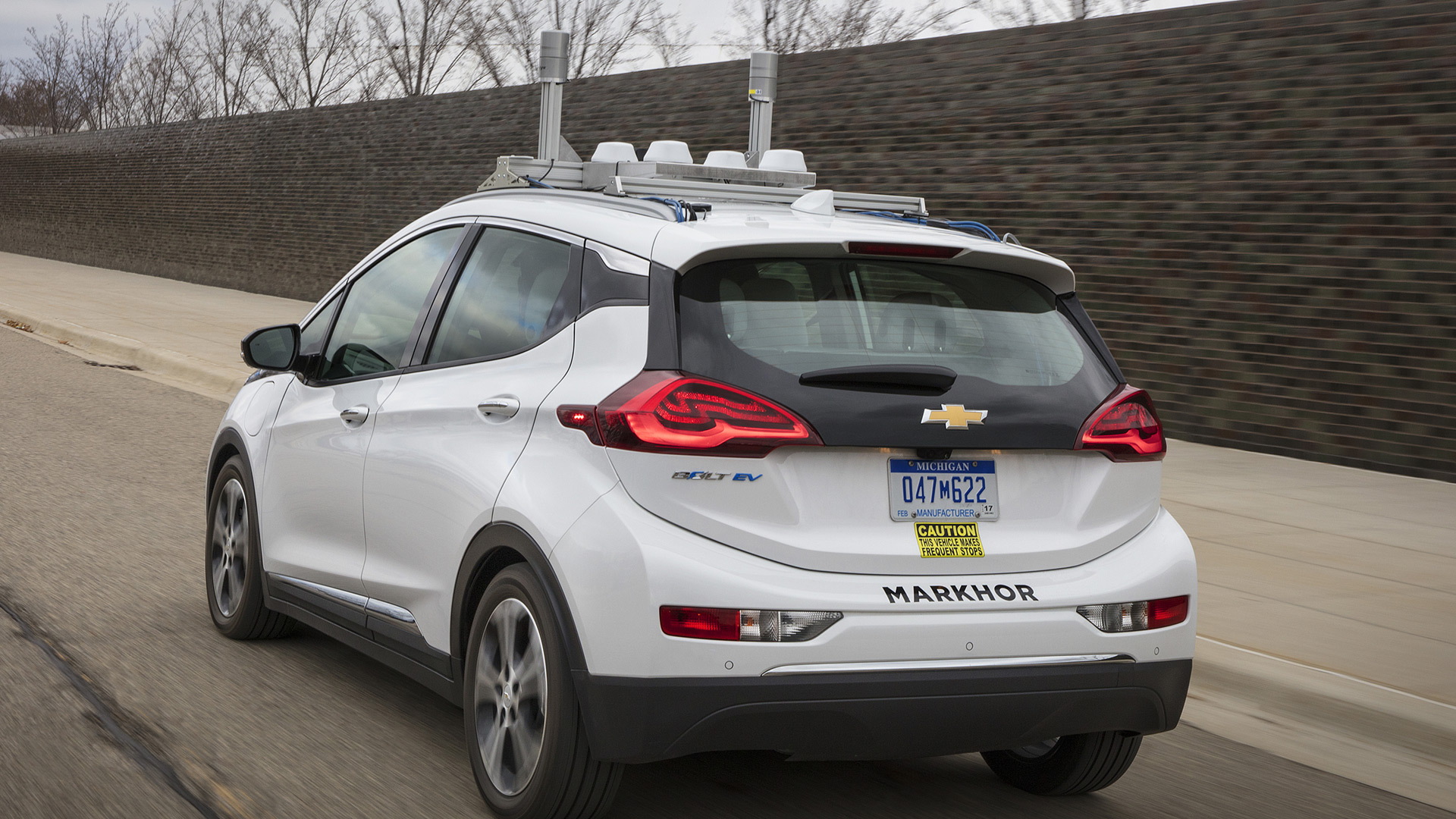
The string of engineers who spoke Thursday night during a deep dive into Cruise’s autonomous vehicle technology never mentioned Tesla’s name. Since becoming part of General Motors in March 2016,[17] Cruise has been working on developing software and hardware to make fully autonomous vehicles using modified Chevrolet Bolts. Learn how to use Membership Rewards® points to book flights, prepaid hotels, and more.
The Hotel Collection
Bookings must be made using an eligible Card and must be paid using that Card, or another American Express® Card, in the eligible Card Member's name, and that Card Member must be traveling on the itinerary booked. The average total value of the program benefits is based on prior-year bookings for stays of two nights; the actual value varies. Noon check-in and room upgrade are subject to availability and are provided at check-in; certain room categories are not eligible for upgrade. The type of experience credit or additional amenity (if applicable) varies by property; the experience credit will be applied to eligible charges up to the amount of the experience credit. The type and value of the daily breakfast (for two) varies by property; breakfast will be valued at a minimum of US$60 per room per day.

Most autonomous vehicle companies have stuck to testing along the sun belt or in cities with mild weather. Inclement weather like rain or snow can affect the ability of sensors, like lidar, radar and cameras, to accurately perceive the environment and make safe driving decisions. As a rainy city with plenty of hills, Seattle will present a unique challenge for Cruise’s self-driving system. The move to expand operations to two cities on opposite coasts comes as pressure mounts for the robotaxi company in its hometown of San Francisco.
In fact, when the computation takes longer, there are second order effects like increase in contention for the same fixed hardware resources which can further exacerbate issues unless they’re handled appropriately. The compute workload for executing the L4 fully driverless Autonomous Vehicle (AV) function is massively compute- and data-intensive, often featuring multiple AI models to carry out the tasks from perception to planning+control. In this article, we describe a vertically integrated, tightly-coupled HW/SW approach to addressing the growing computational complexity, while ensuring minimal disruption to engineering velocity. Cruise first soft-launched its robotaxi service in Chandler, a city southeast of Phoenix, in December 2022. In early August, the company expanded its radius in the Phoenix area by 20x to include Tempe and Scottsdale. For “power users” initially, and then will roll out to members of the general public.
During our operational pause over the last few months, Cruise maintained ongoing and extensive testing in complex, dynamic simulated environments and on closed courses, enabling continuous retraining and improvement. Now, we are building on that work to create high-quality semantic maps and gather road information to ensure future operations meet elevated safety and performance targets. And because no two cities are the same, we plan to conduct this manual and supervised driving in multiple cities - starting with Phoenix - to expose our AVs to a diverse set of driving environments and conditions as we prepare for future driverless service. The AI models are trained on Cruise’s ML platform using popular DL frameworks like PyTorch and TensorFlow.
Here at Cruise, we are solving this already complex problem in the city of San Francisco, arguably one of the most hectic urban environments in the nation. To date, our AVs have already accumulated over 1,000,000 miles of fully autonomous miles (i.e., without a safety driver) on SF streets. From here, we are scaling to new cities while deepening our presence in SF.
Cruise, the self-driving subsidiary of General Motors, said Monday it has begun manual data collection in Seattle and Washington, DC, the first step toward launching commercial services in the cities. Our goal is to earn trust and build partnerships with the communities such that, ultimately, we resume fully driverless operations in collaboration with a city. We have temporarily paused driverless service in all markets while we evaluate how to best serve our riders and the communities where we operate. Cruise just gained approval in California to perform commercial delivery services, and is still one permit away from being able to charge for driverless ride-hailing. Still, Cruise thinks it’ll be able to drive down costs enough to scale up and out quickly.
Model optimization may be applied during training (e.g., Quantization Aware Training) or in a post-training step. Next, the model is converted from the DL framework (PyTorch / TensorFlow) script to runtime binaries that are performant (within latency budgets) and meet the safety and reliability constraints. These binaries are then integrated into the AV stack and undergo a CI testing pipeline. The final step is road-testing, which can be either real, on-road testing or on our real-world simulation platform.
During GM’s investor day in October, Cruise CEO Dan Ammann outlined the company’s plan to invest heavily into the compute power of the Origin in order to decrease costs by 90% over the next four generations so it can scale profitably. At the time, Ammann mentioned Cruise’s intention to manufacture custom silicon in-house to cut costs, but didn’t admit outright using that silicon to build a chip — but TechCrunch had its theories. On Thursday, Rajat Basu, chief engineer for the Origin program, validated those theories. Test scenarios also include simulating the way other road users react to the AV.



No comments:
Post a Comment